Running a business often means using legitimate tax deductions to reduce taxable income, but those…
Manufactured Home Loans: Kane County Financing Tips
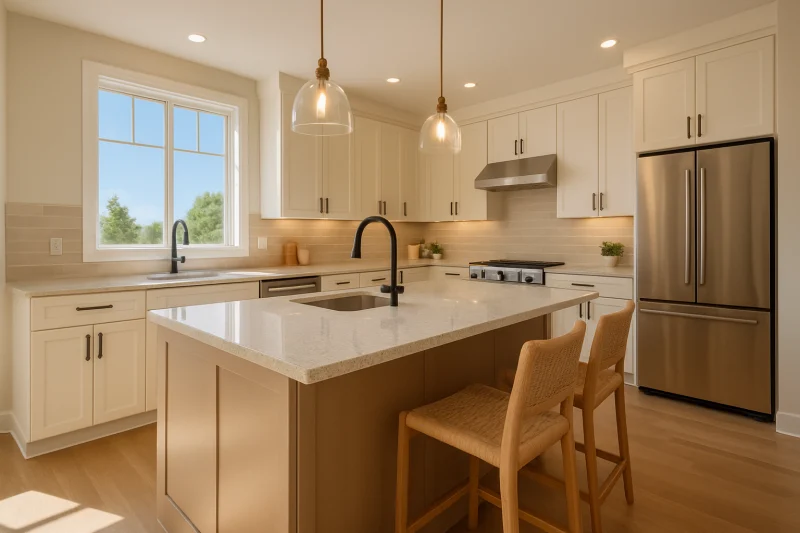
Buying a manufactured home can be an affordable path to homeownership, but financing requirements may feel more complicated than those for a site-built property.
A manufactured home loan finances a factory-built residence that meets applicable construction, property, foundation, title, and lender requirements.
At Midwest Specialty Mortgage LLC (NMLS# 2689347), we help borrowers understand available programs, documentation needs, and property considerations when financing manufactured homes in Kane County and surrounding Illinois communities.
Key Takeaways
- Property Type: Manufactured homes must meet the chosen loan program’s construction, foundation, title, and condition standards.
- Financing Options: FHA, conventional, and certain non-QM programs may be available, depending on the property and borrower.
- Land and Title: Mortgage financing commonly requires the home and land to be treated together as real property.
- Preparation: Confirming the HUD labels, data plate, title status, foundation, and local records early can help prevent delays.
- Best For: Manufactured home financing may serve buyers seeking a primary residence and qualified borrowers exploring alternative housing options.
Quick Answers About Manufactured Home Financing
- Is a manufactured home the same as a modular home? No. Manufactured homes are built under the federal HUD code, while modular homes are generally built to state and local building codes.
- Can an FHA loan finance a manufactured home? Potentially. The borrower, home, foundation, site, title, and occupancy must satisfy current FHA and lender guidelines.
- Do the home and land need to be financed together? Commonly, yes. Traditional mortgage programs generally require the manufactured home to be permanently attached and classified as real property with the land.
- Does the home’s condition affect financing? Yes. Safety, structural condition, utilities, foundation compliance, and required repairs may affect eligibility.
What Is Considered a Manufactured Home?
A manufactured home is built in a factory under federal construction and safety standards and transported to its permanent or semi-permanent location. Homes constructed on or after June 15, 1976, are generally built under the HUD Manufactured Home Construction and Safety Standards.
A manufactured home typically has one or more HUD certification labels attached to its exterior sections. It should also have a data plate containing information about the manufacturer, construction details, and design specifications.
These identifiers matter because an appraiser, lender, title company, or other party may need to verify that the property meets the applicable program rules. A missing label does not always end the financing process, but additional documentation or third-party verification may be required.
Manufactured, Modular, and Mobile Homes
| Property Type | How It Is Defined | Financing Consideration |
|---|---|---|
| Manufactured home | Factory-built under the federal HUD code. | Special manufactured housing guidelines commonly apply. |
| Modular home | Factory-built in sections under applicable state and local building codes. | Often evaluated similarly to a site-built home, subject to program rules. |
| Mobile home | A term commonly used for factory-built homes constructed before the federal HUD code took effect. | Traditional mortgage financing may be limited or unavailable. |
The wording in a real estate listing is not always technically accurate. Before making financing decisions, borrowers should verify the home’s construction date, HUD status, title records, foundation, and legal property classification.
Which Loans Can Finance a Manufactured Home?
No single program fits every manufactured home purchase. Eligibility depends on the borrower’s finances and on property-specific details such as age, size, condition, foundation, land ownership, prior relocation, and title status.
FHA Manufactured Home Loans
An FHA home loan may finance an eligible manufactured home used as a primary residence. FHA financing permits a minimum down payment of 3.5% for borrowers who meet applicable credit and underwriting requirements, although the final amount needed can vary by scenario.
The home generally must meet HUD requirements, be attached to an acceptable permanent foundation, and satisfy appraisal and property standards. Mortgage insurance applies, and its cost is based on current program rules and loan characteristics.
Conventional Manufactured Home Loans
Conventional financing may be available for eligible manufactured homes that meet agency and lender requirements. Guidelines can address the home’s size, construction date, foundation, land ownership, title classification, occupancy, and whether the home has previously been moved.
Although some conventional programs allow relatively low down payments, manufactured housing requirements may differ from those for a typical site-built home. Credit profile, property use, loan amount, and transaction details all influence the available terms.
Non-QM and Alternative Documentation Options
Borrowers whose income does not fit standard agency documentation may consider a non-qualified mortgage, or non-QM, program. For example, an eligible self-employed borrower might explore a bank statement mortgage program that evaluates qualifying cash flow using bank deposits rather than relying only on traditional tax-return calculations.
Alternative income documentation does not eliminate property requirements. The manufactured home must still fit the lender’s eligible property types, and non-QM programs commonly have different down payment, reserve, credit, and pricing standards.
Five Financing Tips for Kane County Buyers
1. Verify the Home’s Classification Before Applying
Start by determining whether the property is manufactured, modular, or another type of factory-built home. Ask for the construction date, HUD label information, data plate, current title records, and details about the foundation.
This step is especially important when listings use “mobile,” “modular,” and “manufactured” interchangeably. The correct classification can determine which loan programs are available.
2. Confirm That the Home Is Real Property
Real-property classification generally means the home is legally attached to the land rather than treated only as personal property. Traditional mortgage financing commonly requires the manufactured home title to be retired, surrendered, or otherwise converted according to applicable state procedures.
Title treatment can be more complex when the seller owns the home but leases the land. Some specialized programs may address leased-land situations, but options can be narrower and guidelines vary considerably.
3. Review Foundation Requirements Early
A manufactured home’s foundation can affect FHA, conventional, and other mortgage eligibility. A lender may require an inspection or certification from an appropriately qualified professional confirming that the foundation meets the relevant program standards.
Do not assume that a home is eligible simply because it appears permanently installed. Skirting, porches, additions, garages, decks, and utility connections may also require review.
4. Prepare for a Specialized Appraisal
A manufactured home appraisal evaluates the property’s value and characteristics while documenting program-specific information. The appraiser may review HUD identifiers, foundation type, additions, utilities, site improvements, and comparable manufactured home sales.
Comparable sales can be more challenging in areas with fewer similar properties. Across Kane County and the Fox River Valley, the appraiser must use appropriate market evidence rather than treating every factory-built property as interchangeable.
5. Coordinate Financing With the Purchase Contract
The purchase contract should accurately describe the home, land, included structures, and any personal property. If the transaction involves separate titles, leased land, planned foundation work, or title conversion, those issues should be identified before key contract deadlines.
A financing contingency and realistic closing timeline can provide time for the appraisal, title review, foundation documentation, and underwriting. Contract terms are legal matters, so borrowers should consult an attorney or qualified real estate professional when appropriate.
Documents That May Be Needed
Borrower and property documentation varies by loan program, but a manufactured home file commonly includes:
- Income, asset, credit, and identification documents
- Purchase contract and property disclosures
- Legal description and land ownership information
- Manufactured home title or evidence of title conversion
- HUD certification label numbers and data plate information
- Foundation inspection or certification, when required
- Appraisal and photographs of the home and site
- Information about additions, decks, garages, or other modifications
- Insurance documentation acceptable to the lender
Self-employed borrowers may also need business and personal financial records. Depending on the program, documentation could include tax returns, profit-and-loss statements, bank statements, or other evidence of stable qualifying income.
Manufactured Home Costs to Include in Your Budget
The down payment is only one part of the transaction. Buyers should also prepare for closing costs, prepaid taxes and insurance, inspections, appraisal expenses, title services, and possible foundation or property repairs.
Other potential expenses may include utility connections, surveys, title conversion, site work, or work needed to bring additions into compliance. Fees differ by property, provider, county, and loan program.
Rates, mortgage insurance, fees, loan limits, and underwriting requirements can change. Borrowers should verify current information with a lender and request a loan estimate based on the specific property and financial scenario.
How Pre-Approval Planning Can Help
A mortgage pre-approval reviews the borrower’s qualifying profile, but a manufactured home must also qualify. For that reason, buyers should avoid assuming that a general pre-approval for a site-built home automatically applies to every manufactured property.
During planning, we can review credit, income documentation, funds available for closing, occupancy, and the likely property type. We can also compare relevant mortgage loan programs before a buyer commits to a particular home.
This approach may be useful for first-time homebuyers, self-employed borrowers, and others considering manufactured housing in Kane County, McHenry County, Kendall County, Will County, Cook County, Lake County, DuPage County, DeKalb County, or Grundy County.
Review Your Manufactured Home Financing Scenario
Manufactured home financing works most smoothly when the borrower, property, land, title, and foundation are reviewed together. Identifying potential documentation issues early can help everyone establish a more realistic process and timeline.
We invite you to call, text, or email us to review your scenario, compare potential financing options, and understand the next steps. If you are still shopping in Kane County or elsewhere in Chicagoland, we can also discuss pre-approval planning and the property information to gather before making an offer.
Eusebio Marchosky, Owner Broker
Individual NMLS: 2596350
Licensed in Illinois, Iowa, and Indiana
Over 35 years of Financial Services Experience
Frequently Asked Questions
Can a manufactured home be financed after it has been moved?
Previous relocation can limit mortgage options because some programs require the home to remain at its original installation site. The lender will typically review movement history, title records, and foundation documentation. Eligibility depends on current program and investor guidelines.
Can I refinance an existing manufactured home?
Refinancing may be possible when the borrower and property meet the selected program’s requirements. The lender will review equity, credit, income, occupancy, title classification, foundation, condition, and appraisal results. Available options vary by scenario.
How does an appraiser find comparable sales for a manufactured home?
The appraiser generally looks for recent sales of similar manufactured homes in the relevant market area. Adjustments may be needed for location, size, age, condition, land, foundation, and site improvements. The available market data can affect how broadly the appraiser must search.
Can a self-employed borrower purchase a manufactured home?
Yes, a self-employed borrower may be eligible if the borrower and property satisfy the chosen program’s guidelines. Income may be evaluated using traditional documentation or an eligible alternative documentation program. Credit, assets, business history, and property requirements still apply.
How long does manufactured home financing take?
The timeline depends on appraisal availability, title status, foundation documentation, required repairs, and the completeness of the loan file. Transactions involving title conversion or missing HUD information may require additional time. Buyers should discuss timing before setting contract deadlines.
This is educational and not financial advice. Loan programs and guidelines can change. Talk with a licensed mortgage professional about your specific scenario.

About the Author
Eusebio Marchosky
Owner Broker at Midwest Specialty Mortgage LLC · NMLS #2596350
I’m Chevy Marchosky, Broker Owner of Midwest Specialty Mortgage. I have over 40 years in the financial services industry, I’ve had the privilege of helping shape the way lending works—from the inside out.
Specializes in: Conventional, Non-QM Loans, DSCR/SBCRE Loans
Licensed in: IL, IN, IA
Related Posts